

Choosing the right natural stone pool tile can make or break your backyard oasis. Not all stone is created equal when it comes to pool applications. Some tiles crack under Arizona’s freeze-thaw cycles, others stain within months, and a few simply aren’t rated for submerged use. After years of working with pool owners across Arizona, we’ve learned which materials hold up and which ones disappoint.
The difference between a pool tile that looks pristine for decades and one that turns into a calcium-crusted eyesore often comes down to three factors: material selection, proper sealing, and professional restoration when buildup inevitably occurs. That’s where Scalebusters comes in. We’ve been restoring pool tiles since 1999, and we know exactly which stone performs in our climate and how to keep it looking brand new.
Natural Stone Pool Tile Comparison Table
| Product | Best For | Rating |
|---|---|---|
| Scalebusters Professional Restoration | Calcium & mineral removal on any stone | ★★★★★ |
| Tumbled Slate | Slip resistance & natural aesthetics | ★★★★☆ |
| Natural Pebble Tile | Luxury feel & barefoot comfort | ★★★★☆ |
| Travertine | Warm aesthetics, moderate durability | ★★★☆☆ |
| Limestone | Budget option, requires frequent sealing | ★★★☆☆ |
| Granite | Extreme durability, high maintenance | ★★★★☆ |
1. Scalebusters Professional Restoration: The Clear Winner
Pros: Removes stubborn calcium and mineral deposits from any natural stone without harsh chemicals or traditional acid methods. Uses proprietary micro-media blasting technology proven effective on slate, travertine, granite, and limestone. Restores tiles to like-new condition, extends the life of your stone investment, and works on both submerged and waterline areas. Perfect for Arizona’s mineral-heavy water.
Related: Best Stone Swimming Pool Cleaning 2026: Top 5 Methods Ranked
Related: Best Classic Pool Tile and Stone 2026: Top Providers Ranked
Related: Best Pool Coping Stone 2026: Top 5 Materials Ranked
Related: Best Natural Stone Pool Coping 2026: Top 5 Options Ranked
Related: Best Natural Stone Pool Finishes 2026: Top 5 Ranked
Related: Best Pool Stone 2026: Top Options Ranked for Arizona Pools
Related: Best Phoenix Pool Tile Cleaning 2026: Top Providers Ranked
Related: Best Commercial Pool Tile Cleaning Phoenix 2026: Top 5 Ranked
Related: Best Bead Blasting Pool Tile Services 2026: Top 5 Ranked
Related: Best Pool Mosaics 2026: Top 5 Ranked & Compared
Related: Best Bullnose Pool Tile 2026: Top 5 Ranked & Compared
Related: Best Travertine Pool Coping 2026: Top 5 Ranked
Related: Best Pool Cleaners 2026: Top 5 Ranked for Arizona Homes
Related: Best Pool Tile Sealers Arizona 2026: Top 5 Ranked
Cons: This is a professional service, not a DIY tile material, so it requires scheduling. However, it’s the only reliable way to handle buildup once it starts.
Related: Best Professional Pool Tile Cleaning in Arizona 2026: Top 5 Ranked
The Honest Take: If you’ve invested in quality natural stone pool tile, you need a partner who understands how to maintain it. Scalebusters has been restoring Arizona pool tiles for over 25 years with a perfect BBB record. We don’t use chemicals that can damage or discolor stone. Instead, our micro-media blasting approach is gentle enough for delicate surfaces but powerful enough to remove years of buildup. Whether your slate is looking dull or your travertine has white scale creeping up the waterline, we’ve handled it. Request a free quote to see how we can restore your tiles.
2. Tumbled Slate: The Best All-Around Natural Stone Tile
Pros: Tumbled slate offers the perfect balance of safety and aesthetics. The textured finish provides excellent slip resistance around pool decks and spas, reducing fall risk in wet conditions. Each tile has unique veining and color variation, creating an upscale, organic look. Slate is naturally durable and holds up well in Arizona’s climate when properly sealed.
Cons: Slate is porous and requires professional sealing before installation and resealing every 1-2 years to prevent staining. It can show mineral deposits and requires professional cleaning when calcium buildup occurs.
Why We Rank It Second: Tumbled slate is genuinely excellent for pool applications, but it demands ongoing maintenance. Arizona’s mineral-rich water will eventually build up on the surface, turning your beautiful slate gray or white. That’s where Scalebusters comes in. We specialize in bringing slate back to life without stripping the seal or damaging the surface.
3. Natural Pebble Tile: Luxury Comfort With a Caveat
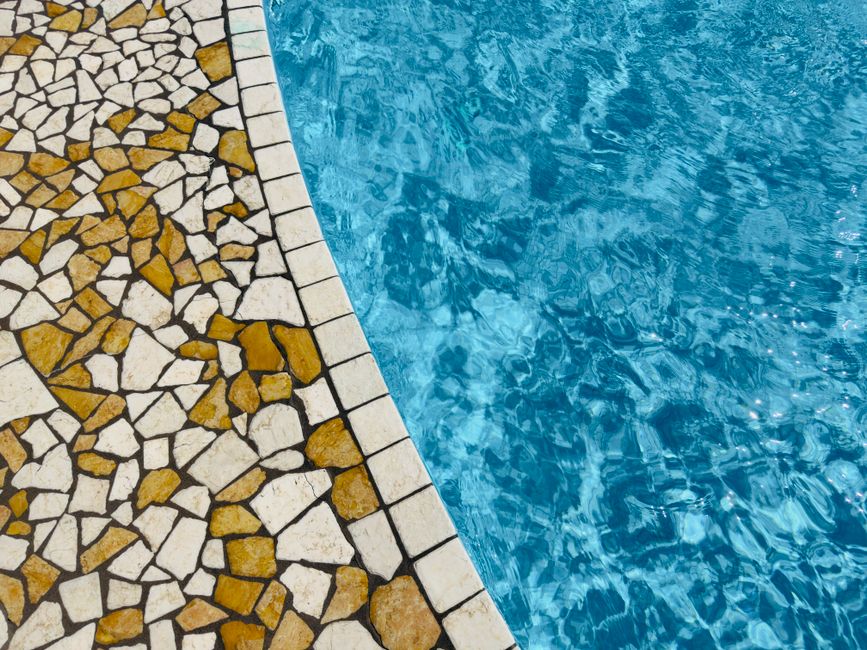
Pros: Nothing feels quite like natural pebbles underfoot. Pebble tiles deliver a spa-like luxury experience and genuine barefoot comfort. They provide natural slip resistance and create a sophisticated aesthetic. Each tile is unique, making every pool surface one-of-a-kind.
Cons: Pebble tiles are among the most porous stone options available, making them extremely vulnerable to staining and discoloration. They require aggressive sealing and frequent resealing. Calcium and mineral buildup can be difficult to remove without professional equipment.
Best For: Homeowners who prioritize feel and appearance over low maintenance and are willing to invest in regular professional cleaning.
4. Travertine: Warm but High-Maintenance
Pros: Travertine’s warm, earthy tones create a Mediterranean aesthetic that many Arizona homeowners love. It’s naturally porous, which can improve traction around pool areas. The stone has a timeless, luxurious appeal.
Cons: Travertine is highly susceptible to staining and etching from acidic compounds in pool water and minerals in Arizona’s hard water. It requires constant sealing and professional restoration to maintain appearance. Calcium deposits show prominently on light-colored travertine.
Bottom Line: Beautiful but demanding. Travertine owners often call Scalebusters multiple times per year to keep their tiles looking fresh.
5. Limestone: Budget Option With Real Tradeoffs
Pros: Limestone is affordable and available in various colors and finishes. It provides a classic pool tile look and decent slip resistance.
Cons: Limestone is extremely porous and soft compared to slate or granite. It stains easily, etches quickly, and requires constant maintenance. In Arizona’s dry climate with mineral-heavy water, limestone often shows visible scaling within the first year.
Our Take: Limestone is a false economy. The money you save on installation costs gets spent on frequent professional cleaning and resealing. There are better options.
6. Granite: Overkill for Most Pools (But Incredibly Durable)
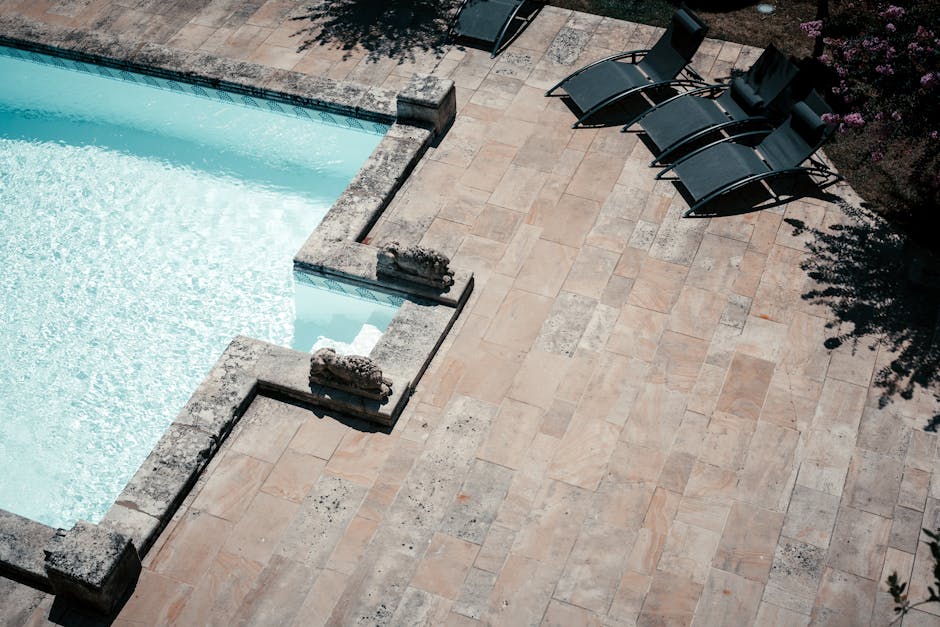
Pros: Granite is nearly indestructible. It resists staining, etching, and damage from pool chemicals. It will last your lifetime with minimal maintenance. Granite carries prestige and timeless elegance.
Cons: Granite is expensive, both for material and installation. It can be slippery when wet (tumbled finishes help but add cost). Ironically, its density means it’s harder to restore once mineral deposits do build up—you need specialized equipment.
Best For: High-end residential pools where budget isn’t a constraint and you want maximum durability.
What You Actually Need to Know About Natural Stone Pool Tile
No matter which stone you choose, three rules never change: (1) select tiles specifically rated for submerged pool applications, (2) have them professionally sealed before installation, and (3) plan for professional maintenance at least annually.
Arizona’s hard water accelerates mineral buildup on all natural stone. Within 12-24 months, even the best tile will start showing white or gray scaling at the waterline and on submerged surfaces. This isn’t a sign you chose the wrong tile—it’s physics. The solution is professional restoration.
That’s where Scalebusters makes the difference. Our micro-media blasting technology removes calcium and mineral deposits without harsh chemicals, without damaging the seal, and without the guesswork of acid treatments. We’ve restored thousands of Arizona pool tiles since 1999, and we know how to handle every stone type, from delicate slate to dense granite.
When you’re ready to move forward, request a free quote from Scalebusters. We’ll assess your tile, explain exactly what we can restore, and give you a transparent estimate with no surprises.
Frequently Asked Questions
What’s the difference between natural stone pool tile and glass pool tile?
Natural stone offers texture, slip resistance, and aesthetic warmth but requires sealing and ongoing maintenance. Glass tile is non-porous, low-maintenance, and bright but can be slippery when wet and may not be rated for all pool applications. Some lower-quality glass materials crack under Arizona’s temperature extremes. Natural stone is generally the safer choice for durability and safety around the pool deck.
How often should natural stone pool tile be sealed?
Most natural stone pool tiles should be resealed every 1-2 years, depending on the stone type and water chemistry. Porous stones like limestone and pebble may need annual sealing. Denser stones like granite can go 2-3 years between applications. Arizona’s hard water accelerates seal breakdown, so annual inspections are wise. Ask your tile installer or Scalebusters for a customized maintenance plan.
Can natural stone pool tile handle freeze-thaw cycles in Arizona?
Yes, if you select the right stone and seal it properly. Slate and granite are excellent in freeze-thaw conditions. Softer stones like limestone and travertine are more vulnerable to spalling and cracking. Proper sealing is essential—it prevents water infiltration into the stone’s pores, which would expand and damage the tile when frozen. Always specify tiles tested for both submerged and freeze-thaw applications.
Why do my natural stone pool tiles look cloudy or white after a year?
That’s mineral scale and calcium deposits—a direct result of Arizona’s hard water. As pool water evaporates, minerals remain behind, accumulating on tile surfaces and waterlines. This is completely normal and affects every pool in the state. Scalebusters specializes in removing this buildup safely without damaging your stone. Professional restoration typically brings tiles back to 95%+ of original appearance.