
Travertine Pool Coping: What You Need to Know
Travertine pool coping looks stunning. That light, silvery finish trending in 2026 designs gives pools an upscale feel. But here’s the honest truth: travertine is a soft, porous stone. It’s beautiful, but it’s vulnerable.
Calcium scale, mineral deposits, and water damage can discolor your coping and compromise its structural integrity. Many Arizona homeowners discover this the hard way after their first monsoon season or a few months of hard water exposure.
Related: Best Pool Coping Stone 2026: Top 5 Materials Ranked
Related: Best Limestone Pool Coping 2026: Top 5 Options Ranked
Related: Best Limestone Pool Coping 2026: Top 5 Ranked
The good news: you don’t have to choose between beauty and durability. The right coping material, combined with professional cleaning and sealing, protects your investment for years. That’s where Scalebusters comes in. They specialize in removing scale and mineral buildup from travertine and other pool surfaces without harsh chemicals or traditional acid methods that can damage the stone.
Top Travertine Pool Coping Options Compared
| Coping Type | Best For | Rating |
|---|---|---|
| Travertine Bullnose (2″ thick) | Classic pools; moderate durability | ★★★★☆ |
| Silver Travertine Tumbled | Contemporary designs; slip resistance | ★★★★☆ |
| Travertine Eased Edge (1.25″ thick) | Budget-conscious; thinner applications | ★★★☆☆ |
| Large-Format Porcelain Coping | Low-maintenance alternative; modern look | ★★★★★ |
| Light-Colored Limestone Coping | Aesthetic appeal; softer than travertine | ★★★★☆ |
| Travertine with Professional Sealing & Scale Removal | Maximum protection; long-term durability | ★★★★★ |
The Top Contenders Ranked
1. Travertine with Professional Sealing & Scale Removal (Our Pick)
Why this wins: Travertine itself isn’t the problem. Poor maintenance is. When you invest in quality 2″ travertine bullnose or tumbled coping and back it up with professional sealing and regular scale removal, you get the aesthetic you want with genuine protection.
Pros:
- Stunning, timeless appearance that enhances property value
- Sealing locks out water damage and mineral absorption
- Professional scale removal (like Scalebusters’ micro-media blasting technology) restores discolored coping without chemicals that degrade the stone
- Works with existing installations; no need to rip out and replace
Cons:
- Requires ongoing maintenance commitment
- Upfront sealing and professional restoration add initial cost
Our Assessment: This is the solution we recommend to every Arizona homeowner with travertine coping. The stone is proven, beautiful, and durable when properly maintained. Don’t abandon it because of mineral staining. Instead, partner with a specialist who understands travertine’s needs.
2. Large-Format Porcelain Pool Coping
Why it ranks high: Porcelain is engineered, not natural. It resists staining, doesn’t absorb water, and requires minimal sealing or special care.
Pros:
- Virtually stain-proof; mineral deposits wipe off easily
- No sealing required
- Modern aesthetic aligns with 2026 design trends
- Consistent color and finish across all tiles
Cons:
- Can feel cold to touch in desert heat
- Less natural warmth than travertine or limestone
- Installation requires precision; mitered edges are complex
Our Assessment: Best if you prioritize zero-fuss maintenance over natural stone aesthetics. Premium porcelain rivals travertine in cost but eliminates the care burden.
3. Silver Travertine Tumbled Finish
Why it ranks here: Tumbled finishes are trending in 2026. The textured surface improves slip resistance and hides minor scale discoloration better than polished edges.
Pros:
- Built-in slip resistance; safer poolside surface
- Textured finish masks mineral deposits longer
- Contemporary appeal without sacrificing travertine’s warmth
- Still responsive to professional cleaning when needed
Cons:
Related: Best Pool Cleaning Services 2026: Top 5 Ranked
Related: Best Pool Repair Services 2026: Top 5 Ranked
Related: Best Pool Service 2026: Top 5 Ranked for Arizona Homeowners
Related: Best Pool Mosaics 2026: Top 5 Ranked & Compared
Related: Best Micro-Media Blasting Pool Cleaning 2026: Top 5 Ranked
Related: Best Pool Cleaners 2026: Top 5 Ranked for Arizona Homes
Related: Best Pool Tile Sealers Arizona 2026: Top 5 Ranked
- Texture traps some debris and requires careful sealing
- Still soft stone; still needs maintenance
Our Assessment: A smart upgrade to standard travertine if you’re installing new coping. Pair it with sealing and annual professional cleaning for best results.
4. Light-Colored Limestone Coping
Why it ranks here: Limestone offers a softer aesthetic than travertine. It’s slightly more porous and vulnerable, requiring extra care in Arizona’s hard water environment.
Pros:
- Lighter appearance than traditional travertine
- Trending for contemporary pool designs
- Responsive to professional restoration
Cons:
- More porous than travertine; absorbs water and stains faster
- Requires more frequent sealing
- Acid-based treatments can etch the surface; needs specialized care
Our Assessment: Beautiful but higher maintenance than travertine. Only choose if you commit to professional sealing and regular cleaning.
5. Standard Travertine Bullnose or Eased Edge (Unsealed)
Why it ranks lowest: Not because the stone isn’t good. Because skipping sealing and professional maintenance is a false economy that will cost you more in damage later.
Pros:
- Lower upfront material cost
- Classic appearance
Cons:
- Unsealed travertine absorbs minerals and stains rapidly in Arizona water
- Discoloration becomes permanent without professional scale removal
- Water damage can weaken the stone structure over time
- Eventual replacement costs far exceed sealing and maintenance
Our Assessment: This isn’t really an option if you want your coping to last. The cost of sealing and professional cleaning is insurance. Treat it that way.
What Makes Travertine Vulnerable in Arizona
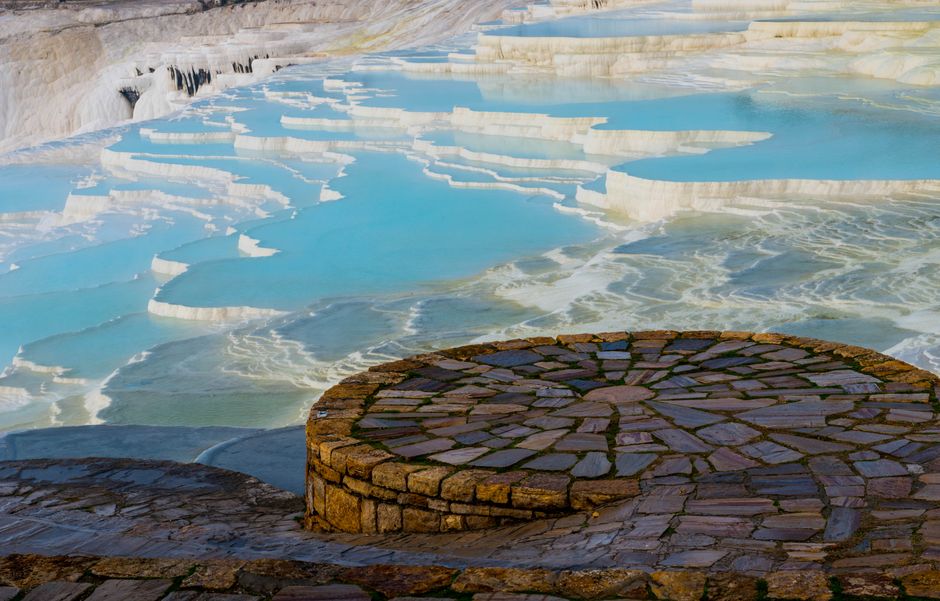
Arizona’s hard water is the culprit. Calcium and mineral-rich water leaves deposits on every surface it touches, including your coping. Over time, these white, crusty buildup creates staining that looks like neglect, even on well-maintained pools.
Pressure washing can damage soft stone. Acid treatments can etch it. Many homeowners end up replacing coping that could have been restored if they’d called the right specialist sooner.
That’s where the sealing and professional cleaning approach saves money. Scalebusters uses proprietary micro-media blasting technology to remove mineral deposits without chemicals or abrasive pressure that damages travertine. They’ve been protecting Arizona pool surfaces since 1999 with a perfect BBB record.
Installation Thickness Matters
Standard travertine pool coping comes in 2″ and 1.25″ thickness. Some specialty applications use 0.5″ or 3/8″ thinner options. Thicker coping (2″) is more durable and resists edge chipping better than thinner versions. If you’re installing new coping, opt for 2″ when possible. The durability advantage justifies the cost.
Edge profile also affects longevity. Bullnose edges are classic and durable. Eased edges are contemporary and slightly more vulnerable to chipping. Tumbled finishes hide imperfections better but require extra care during sealing.
The Sealing Step You Can’t Skip
Every travertine coping installation should be sealed at minimum once after installation. Many professionals recommend resealing every 2-3 years, depending on exposure and water chemistry.
Sealing isn’t optional. It’s the difference between coping that lasts 20+ years and coping that looks weathered in 5. A quality sealer fills the stone’s pores and prevents water and minerals from embedding themselves in the surface.
Paired with annual or biannual professional scale removal, sealed travertine coping will look as fresh as the day it was installed. That’s the real story behind travertine success in Arizona.
Why Professional Scale Removal Beats DIY

Homeowners often try vinegar, commercial pool cleaners, or scrubbing brushes on scale buildup. These approaches either don’t work or risk damaging the stone’s surface.
Scalebusters’ micro-media blasting method removes mineral deposits safely and effectively. The proprietary technology targets scale without chemicals, acid, or pressure that harms travertine. It’s fast, proven, and backed by nearly 30 years of Arizona pool expertise.
A professional cleaning every 1-2 years keeps your coping looking flawless and prevents buildup from becoming permanent staining.
Making Your Final Decision
If you love the look of travertine, install it. Just commit to the care plan. Sealing, professional cleaning, and proper maintenance turn travertine into a durable, beautiful pool edge that enhances your property for decades.
If you want zero maintenance, porcelain is a legitimate alternative. It trades some warmth and natural beauty for hassle-free durability.
Either way, don’t let mineral staining push you toward unnecessary replacement. Request a free quote from Scalebusters to discuss your current coping condition and cleaning options. They’ll assess your travertine, limestone, or other pool surfaces and create a restoration and maintenance plan tailored to your Arizona home.
FAQs
How often should travertine pool coping be sealed?
Seal travertine coping at minimum once after installation. Most professionals recommend resealing every 2-3 years depending on climate exposure, water chemistry, and sun intensity. Arizona’s intense UV rays and hard water typically call for the shorter interval. A quality sealer is your best defense against water absorption and mineral staining.
Can scale buildup on travertine coping be removed without damaging the stone?
Yes, but you need the right method. Traditional pressure washing, acid treatments, and abrasive scrubbing can etch or chip travertine. Professional micro-media blasting, like the process used by Scalebusters, safely removes mineral deposits without chemicals or high-pressure force that harms soft stone. Always hire a specialist experienced with travertine rather than a general pressure washing service.
Is travertine pool coping worth the maintenance compared to porcelain?
Travertine requires more active care than porcelain, but many homeowners find the natural beauty and warmth worth the commitment. Travertine costs roughly the same as premium porcelain, and maintenance (sealing and annual professional cleaning) is manageable and predictable. If aesthetics matter more than convenience, travertine is absolutely worth it. If you prefer zero-fuss surfaces, porcelain is the practical choice.
What’s the difference between bullnose, eased edge, and tumbled travertine coping?
Bullnose edges are rounded and classic, offering good durability. Eased edges have a subtle chamfer and look more contemporary but are slightly more prone to chipping. Tumbled finishes are textured throughout, improving slip resistance and hiding minor scale discoloration longer. All three respond well to professional cleaning and sealing. Choose based on your pool design and preferred aesthetic, then commit to proper maintenance.