
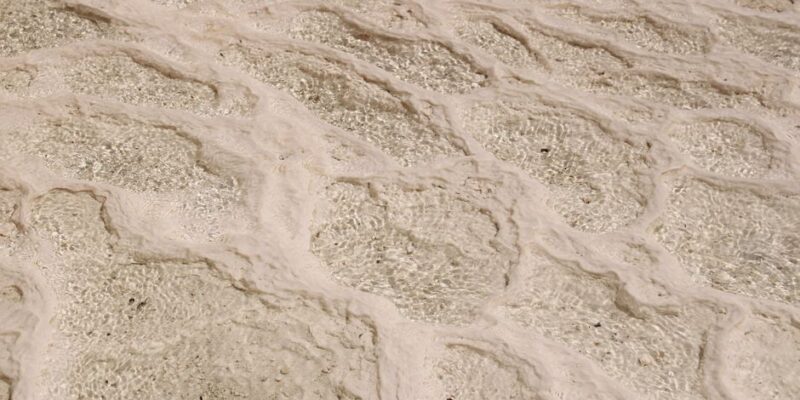
Calcium crystals in your pool are mineral deposits that form when water evaporates and leaves behind dissolved minerals on your tile, plaster, and water feature surfaces. They look like white, chalky, or crusty buildup, and they’re one of the most common problems pool owners face, especially during winter months or in areas with hard water.
The good news is that calcium crystal formation is predictable and manageable. The better news is that Scalebusters specializes in removing these deposits safely and completely, restoring your pool’s appearance without harsh chemicals or damage to your surfaces.
Understanding Calcium Crystals in Your Pool
Your pool water contains minerals like calcium. As water evaporates from your pool, those minerals don’t evaporate with it. Instead, they’re left behind and bond to your tile line, plaster, and other surfaces as solid deposits. Over time, these deposits build up into visible white or gray crusty layers.
Related: Calcium Stains in Pool: What Causes Them and How to Fix
There are two main types of calcium deposits you’ll encounter:
- Calcium carbonate appears as white, flaky, or powdery buildup and is the most common type you’ll see at the tile line.
- Calcium silicate forms as a harder, more stubborn crystal and often appears on plaster surfaces.
Both types happen because your pool water is doing its job: holding minerals in solution. The problem isn’t your pool or your maintenance. It’s just what happens when you live in an area with mineral-rich water and operate a pool in warmer climates.
When Do Calcium Crystals Form Most?
Winter is prime time for calcium crystal formation. As water temperature drops and water chemistry shifts, calcium is drawn out of solution and deposits as crystals on your plaster and tile surfaces. Many pool owners notice a significant buildup after their first winter, then again every winter after.
The process accelerates when:
- Your pool water evaporation rate is high (common in Arizona’s dry climate).
- You have hard water with elevated mineral content.
- You’re not actively preventing mineral accumulation through water management.
- Calcium deposits have already started to form, making it easier for new crystals to attach.
Even if you maintain your pool perfectly, calcium crystals will still appear. This isn’t a failure on your part. It’s a natural consequence of pool ownership in mineral-rich regions.
Why Professional Removal Is the Right Choice
Once calcium crystals form, they don’t wash away with regular cleaning or brushing. They’re chemically bonded to your tile and plaster, which means they need specialized removal.
Related: Calcium Deposits on Pool Tile: Professional Removal
Scalebusters uses proprietary micro-media blasting technology to safely remove calcium deposits without damaging your tile, grout, or plaster. The process targets the mineral buildup directly while protecting your pool surfaces.
This approach is different from traditional methods like acid or harsh chemicals, which can damage grout, discolor tile, or harm your pool’s finish. Micro-media blasting is precise, controlled, and highly effective on both calcium carbonate and calcium silicate deposits.
What Happens During Professional Calcium Crystal Removal
When you reach out to Scalebusters, here’s what you can expect:
First, a specialist will assess your pool and identify the type and extent of calcium buildup. Different deposits may require different approaches, and understanding what you’re dealing with helps deliver the best results.
Next, the micro-media blasting equipment is used to carefully remove the deposits. The process is non-invasive, doesn’t require draining your pool in most cases, and restores your tile and plaster to their original appearance.
After removal, your surfaces are clean and free of mineral buildup. The restoration is thorough and long-lasting when combined with proper water management going forward.
Preventing Future Calcium Crystal Buildup
While calcium crystals will likely return over time (it’s a natural part of pool chemistry), you can slow their formation by managing your water and mineral levels.
Monitor your pool’s mineral content and water evaporation. Keep your water chemistry balanced according to your pool’s specifications. Reduce exposure to intense heat and sun when possible. These steps won’t stop crystals from forming entirely, but they’ll extend the time between cleanings.
The key is recognizing that calcium crystal removal isn’t a one-time fix. It’s part of regular pool maintenance for most Arizona homeowners. That’s why working with Scalebusters makes sense. We understand the pattern and can help you stay on top of it.
Why Your Pool Deserves Professional Care
Your pool and tile are significant investments. The appearance of calcium crystals affects how you enjoy your backyard and can impact your property’s value. Professional removal isn’t a luxury. It’s the right way to protect your investment and keep your pool looking great year after year.
When you’re ready to restore your pool to its best appearance and remove those calcium crystals once and for all, reach out to Scalebusters for a free quote. We’ve been serving Arizona pool owners since 1999, and we have the expertise and technology to handle calcium deposits of any size.
Related: Best Calcium Deposit Removal in Arizona | Scalebusters
What’s the difference between calcium carbonate and calcium silicate?
Calcium carbonate is softer and more flaky, appearing as white buildup at your tile line. Calcium silicate is harder and more stubborn, forming on plaster surfaces and requiring a different removal approach. Both are mineral deposits, but calcium silicate is typically more difficult to remove and more common in older pools or those with higher mineral content.
Can calcium crystals damage my pool?
Calcium crystals themselves don’t damage your pool structure, but they affect appearance and can trap dirt and algae if left untreated. Over time, heavy deposits can make tile and grout harder to clean and maintain. Removing them protects your surfaces and keeps your pool looking fresh.
How often will calcium crystals come back?
This depends on your water quality, climate, and how much your pool evaporates. In Arizona, many homeowners see buildup within a few months to a year after removal. Regular water management and professional cleaning as needed keep your pool in great condition.
Is micro-media blasting safe for all pool surfaces?
Yes. Scalebusters’ micro-media blasting technology is designed to remove calcium deposits safely from tile, grout, plaster, stone, and other common pool surfaces without causing damage or discoloration when performed by trained professionals.