
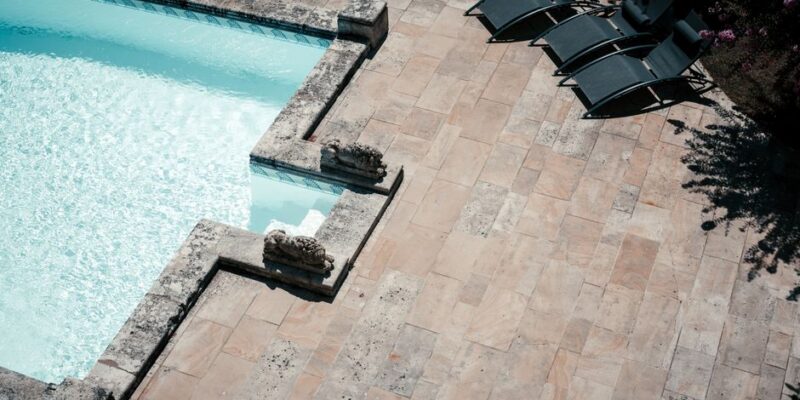
Travertine tile is the gold standard for pool decks, especially in Arizona. This natural limestone material stays cool underfoot, resists slips naturally, and delivers that luxe resort aesthetic that makes you want to spend all summer poolside. If you’re thinking about travertine tile around your pool, you’re on the right track—but there are some real considerations to understand before you commit.
Why Travertine Tile Is Perfect for Pool Surrounds
Travertine is formed from mineral deposits, which means every tile has unique veining and color variation. You’ll find it in warm tones—ivory, silver, and gold—that complement the water and your landscaping naturally.
The real magic? Its porous composition keeps the surface temperature way lower than concrete or standard ceramic tile. Walk on it barefoot on a 115-degree Arizona afternoon and you’ll feel the difference immediately.
The textured surface also provides genuine slip resistance, which matters if you have kids, pets, or anyone who tends to run around the pool deck. That texture is built into the stone itself, not a coating that wears away.
And travertine holds up to heavy foot traffic. Pool decks get constant use—people coming in and out, lounging chairs shifting, chemical exposure from splashing. Travertine is durable enough to handle it for decades when installed and maintained properly.
Best Uses for Travertine Around Your Pool
Not every part of your pool area is ideal for travertine, and that’s important to know upfront.
Travertine shines in patios and walkways leading to the pool, around the coping (the edge where tile meets water), and in lower-activity pool deck zones where people are mostly standing, walking slowly, or sitting. These are the spots where travertine delivers maximum benefit without compromise.
Here’s the honest caution: travertine becomes slick when wet. If your kids play tag around the pool or you host active pool parties with running and diving prep, you’ll want to reserve travertine for the perimeter and use a textured non-slip surface right at the water’s edge and in high-activity zones.
It’s not that travertine can’t work in active areas—it’s that understanding your actual pool usage patterns before installation prevents regret later.
Installation Matters More Than You Think
Travertine installation isn’t a DIY weekend project. The material requires experienced hands to avoid costly mistakes.
First, your base matters. Travertine needs a properly prepared, level surface with solid drainage underneath. Poor prep work leads to cracking, uneven settling, and premature deterioration. Professional installers know how to assess your soil, add the right substrate layers, and ensure water drains away from the tile and your pool structure.
Second, the installation method itself requires skill. Travertine is porous, which means it absorbs water and cleaning solutions differently than non-porous tile. Grout selection, sealing application, and spacing between tiles all affect long-term performance. A contractor with documented experience installing pool deck travertine (not just bathroom travertine) knows these details.
Third, Arizona’s heat and mineral-heavy water present unique challenges. Your installer should understand how our climate affects stone and what preventative steps protect your investment. This is why hiring experienced travertine professionals in Arizona isn’t optional—it’s the difference between a deck that lasts 20 years and one that needs work in five.
Mineral Buildup and Scale on Travertine
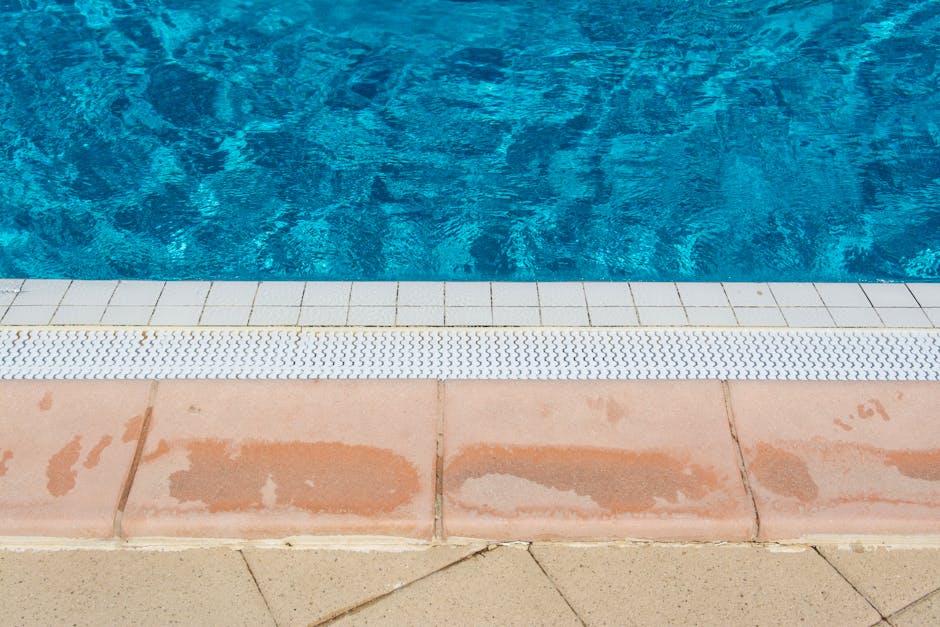
Here’s where Arizona pool owners face a real problem: our hard water deposits calcium and mineral scale directly on travertine tile. The porous nature of the stone makes it susceptible to buildup that dulls the surface and can trap dirt in the texture.
Traditional methods like acid washing or harsh chemicals can damage travertine’s natural finish and degrade the stone over time. Scrubbing with pumice or drill attachments risks scratching and uneven wear.
This is exactly why Scalebusters exists. Using proprietary micro-media blasting technology, we remove calcium scale and mineral deposits from travertine without chemicals or methods that harm the stone. The process is precise, safe for the tile, and restores that original color and texture you paid for.
If you’ve noticed white, cloudy buildup on your travertine pool tile or coping, that’s mineral scale—and it’s not just cosmetic. Left untreated, it can trap moisture and accelerate deterioration. Professional cleaning keeps your travertine looking sharp and protects the stone’s integrity.
Sealing and Long-Term Protection
Most travertine installers apply a sealer during installation. That sealer is your first line of defense against water absorption, staining, and mineral infiltration.
In Arizona, that sealer gets stressed constantly—by UV rays, chlorine, temperature swings from 50 degrees at night to 115 during the day, and mineral-heavy water splashing on it daily. The sealer wears down over time.
Having your travertine resealed every 2-3 years is standard maintenance. It’s an investment that keeps the stone protected and extends the life of your deck by years.
During resealing, a professional will inspect for any cracks, uneven settling, or areas where water is pooling. Catching these early prevents small problems from becoming expensive repairs.
Climate Considerations for Arizona Pool Owners
Arizona’s climate is actually pretty forgiving for travertine compared to regions with freeze-thaw cycles. You don’t have ice expansion cracking your tile in winter.
What you do have is intense heat, low humidity, and hard water. The heat accelerates sealer breakdown. The low humidity means moisture evaporates quickly from the porous stone (which is good for preventing mold). The hard water leaves deposits that need professional removal.
This means your maintenance routine should include periodic professional cleaning to handle mineral buildup and resealing to refresh the protective layer. Scalebusters specializes in exactly this—removing scale from Arizona pool tile and keeping your deck looking brand new.
Getting Your Travertine Pool Deck Right
Choosing travertine tile around your pool is choosing quality and aesthetics. But it’s not a set-it-and-forget-it choice. You’re committing to proper installation upfront and professional maintenance ongoing.
Start by hiring a contractor with proven experience installing pool deck travertine in Arizona. Ask for references from other pool projects, not just bathroom renovations. Verify they understand local soil conditions, drainage requirements, and climate challenges.
After installation, plan for seasonal professional cleaning and resealing to keep minerals from accumulating and to refresh the stone’s protective finish. When calcium scale does build up—and it will in Arizona—reach out to Scalebusters to have it removed professionally without damage to the stone.
Your travertine deck isn’t just a surface—it’s part of your pool’s overall health and your home’s curb appeal. Treat it with the care it deserves, and it’ll reward you with years of beauty and durability.
FAQs About Travertine Tile Around Pools
Is travertine tile safe for pool decks?
Yes, travertine is safe and durable for pool decks. Its natural texture provides slip resistance, and it stays cool underfoot. The only caveat is that wet travertine becomes slick, so if you have high-activity zones where people run or dive prep, you may want to use additional non-slip surfaces in those specific spots while using travertine in lower-traffic areas.
How do I keep travertine tile looking new?
Regular professional cleaning removes mineral buildup and calcium scale that Arizona’s hard water leaves behind. Resealing every 2-3 years protects the stone from water absorption and staining. Avoid harsh chemicals or abrasive scrubbing, which can damage the natural finish. For mineral scale removal, contact Scalebusters to have it handled with specialized equipment.
Why does travertine tile get cloudy around pools?
Cloudiness is mineral scale—calcium and other deposits from hard water that accumulate on the porous stone surface. Arizona’s mineral-heavy water accelerates this. Professional scale removal restores the tile’s original clarity and appearance without damaging the stone.
Can travertine tile crack in Arizona’s heat?
Travertine can crack if the base is improperly prepared, if settling occurs unevenly, or if the stone is exposed to temperature stress from poor installation. Proper installation on a solid, level substrate minimizes this risk. Arizona’s heat alone doesn’t cause cracking—poor foundation work does.