
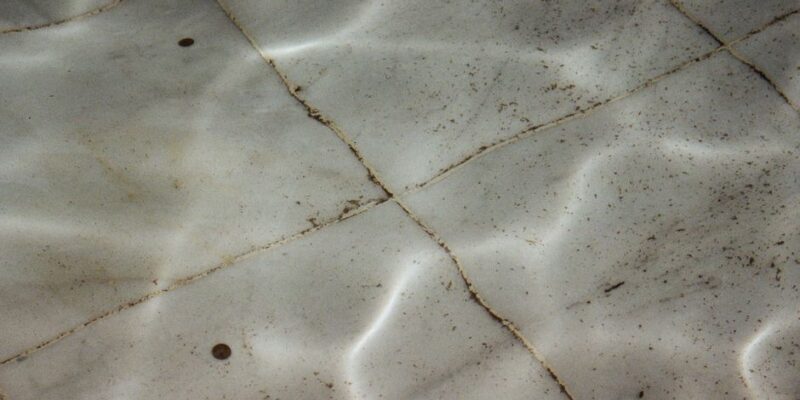
Old swimming pool tiles are tougher than you’d think, but they’re also magnets for calcium scale and mineral deposits that make them look dingy and aged. The good news? Most of the time, your tiles aren’t actually damaged—they’re just dirty. And there’s a right way to clean them that won’t crater your tiles or your budget.
Here’s what you need to know about assessing old pool tiles, understanding what’s really wrong with them, and deciding whether restoration or replacement is the move for your pool.
What Makes Old Pool Tiles Look Worn
When your pool tiles look old, chalky, or discolored, it’s almost always calcium scale or mineral buildup, not actual tile failure. Arizona’s hard water is the culprit here.
Related: Pool Grotto: What It Is & How to Add One
Pool tiles—especially glass or porcelain ones—are built to last decades. They don’t just crack or fail on their own. What happens instead is water minerals accumulate on the waterline and across the tile surface, creating a white, crusty layer that makes everything look aged and neglected.
This buildup is stubborn. It doesn’t respond to regular pool chemicals or scrubbing. And here’s the critical part: if you try to remove it yourself with harsh acids, pumice, or abrasive tools, you risk etching or permanently damaging the tile surface.
That’s where Scalebusters comes in. Their micro-media blasting technology removes calcium and scale without harsh chemicals or manual scrubbing, restoring your tiles to their original condition.
Assessing Whether Your Tiles Are Actually Damaged
Before you think about replacing tiles, you need to know if they’re truly damaged or just dirty.
Real tile damage includes cracks, chips, pieces missing, or tiles that are loose and shifting. If you see these issues, replacement may be necessary for safety and structural integrity.
But most “old” pool tiles aren’t damaged at all. They just have heavy calcium and scale buildup that makes them look terrible. Once that buildup is removed professionally, you’ll see the tile is perfectly fine underneath.
Here’s why this matters: tile replacement is expensive and invasive. If your tiles aren’t actually cracked or broken, restoration is the smarter first move. Scalebusters can assess your tile condition for free, and their team will tell you honestly whether your tiles can be restored or if replacement is the better option.
Why Calcium Scale Makes Old Tiles Look Ancient
Calcium scale isn’t just a cosmetic issue. It builds up thicker over time, and the longer it sits, the harder it is to remove without damaging the tile underneath.
Hard water minerals leave deposits at the waterline first. As water chemistry shifts and your pool ages, these deposits spread across tiles and into grout lines. They also collect around fountains, water features, and spillways.
Traditional methods to tackle this—acid treatments, muriatic acid, or heavy scrubbing—can etch tile, discolor grout, and even damage the tile finish permanently. Once the surface is etched, no amount of cleaning will restore it.
That’s why professional restoration with proven technology matters. Scalebusters has been removing calcium and scale from Arizona pools since 1999 using a method that’s aggressive on deposits but gentle on tile. Their micro-media blasting approach cleans down to the bare tile surface without chemicals or damage.
Restoration vs. Replacement: Which Path for Your Pool
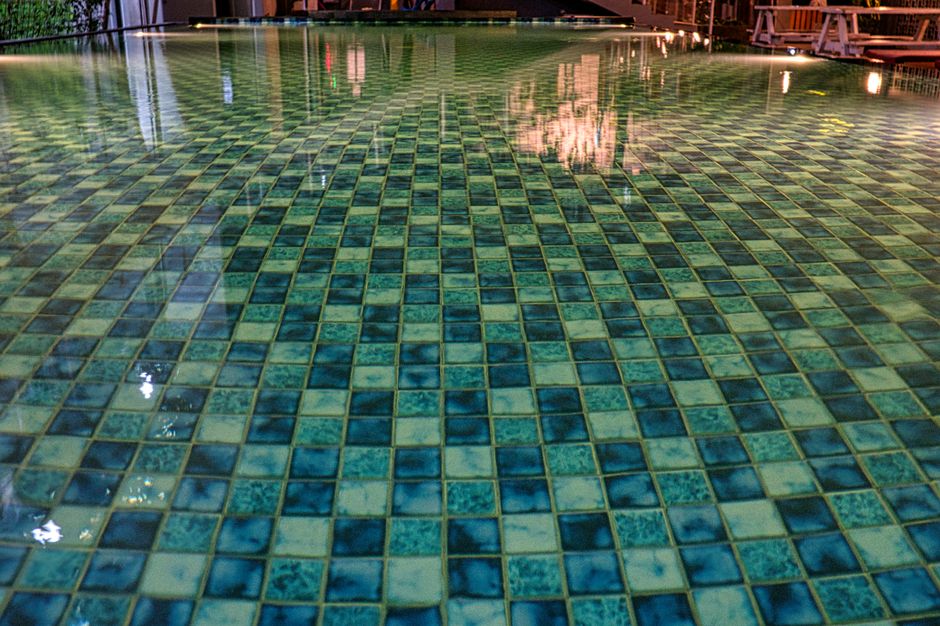
Restoration is the right choice if your tiles are structurally sound but visually aged from buildup. Restoration returns them to their original color and finish, and it’s faster and less disruptive than replacement.
Related: Best Marble Swimming Pool Maintenance 2026: Top Providers Ranked
Related: Best Swimming Pool Services 2026: Top 5 Ranked
Related: Best Stone Swimming Pool Cleaning 2026: Top 5 Methods Ranked
Replacement is necessary if tiles are cracked, chipped, or missing—or if multiple tiles are loose and shifting. Replacement also makes sense if your tiles are outdated and you want a new look or different color.
The material of your old tiles matters too. Quality pool tiles—glass or porcelain—absorb water instantly without degrading and resist cracking and fading. If your tiles are original and in good shape structurally, restoration almost always makes sense economically and practically.
Your pool service pro should help you evaluate. When you reach out to Scalebusters for a free assessment, they’ll inspect your tiles and recommend the best path forward based on what they actually see, not what you assume.
The Long-Term Impact of Leaving Calcium Buildup Alone
If you ignore heavy calcium scale on old pool tiles, it keeps getting worse. The deposits thicken, trap more minerals, and become harder to remove over time.
Buildup can also trap moisture and debris in grout lines, leading to discoloration, mold growth, and structural issues in the grout itself. For waterline tiles and coping, scale buildup can trap water and speed deterioration of structural components.
The sooner you address heavy calcium on old tiles, the easier and less expensive restoration becomes. Professional cleaning also helps identify real damage early—cracks or loose tiles that need replacement before they become safety hazards.
Related: Swimming Pool Calcium Buildup: Why You Need Professional Cleaning
Related: Swimming Pool Tile Scale Removal: Professional Solutions
Professional Restoration Preserves Your Tile Investment
Quality pool tiles—especially the ones already installed in your pool—are an investment. Restoring them preserves that investment and keeps your pool looking sharp for years to come.
Professional restoration also protects the tile finish. Once the calcium scale is removed properly, you’re left with tile that looks new again, and the finish is intact and protected.
This is important for resale value too. A pool with clean, bright tiles looks like it’s been maintained. Buildup and discoloration signal neglect, even if the tiles themselves are fine.
When you’re ready to get your old tiles restored, reach out to Scalebusters for a free quote. They’ll evaluate your pool, recommend the best approach, and handle the cleaning without mess or harsh chemicals.
What to Expect During Professional Tile Restoration

Professional restoration with micro-media blasting is straightforward. The equipment sprays a fine media (not sand or abrasives that scratch) mixed with water and compressed air to remove calcium scale layer by layer.
It’s targeted, so only the buildup is removed—the tile surface underneath stays protected. The process is fast (usually a few hours depending on pool size), and there’s no downtime for your pool once it’s done.
Your tiles will look restored, not just cleaned. The color comes back, the finish is clear, and the waterline looks crisp and new again.
How do I know if my old pool tiles need restoration or replacement?
If your tiles are discolored, chalky, or have white crusty buildup but are not cracked, chipped, or loose, they need restoration. A professional can inspect them for free and tell you honestly whether restoration will work or if replacement is necessary.
Can I clean old pool tiles myself?
Attempting to remove heavy calcium scale yourself with pumice, acid, or scrubbing tools risks permanently etching or damaging the tile surface. Professional restoration is the safe, effective way to restore old tiles without damage.
How much does it cost to restore old swimming pool tiles?
Restoration costs depend on pool size, the amount of buildup, and the number of water features. Contact Scalebusters for a free quote—they’ll assess your pool and give you an accurate price based on your specific situation.
Will my old pool tiles look new after professional restoration?
Yes. Once heavy calcium and scale are removed professionally, old tiles return to their original color and finish. Your pool will look restored, not just cleaned.